
The Grands Dépôts
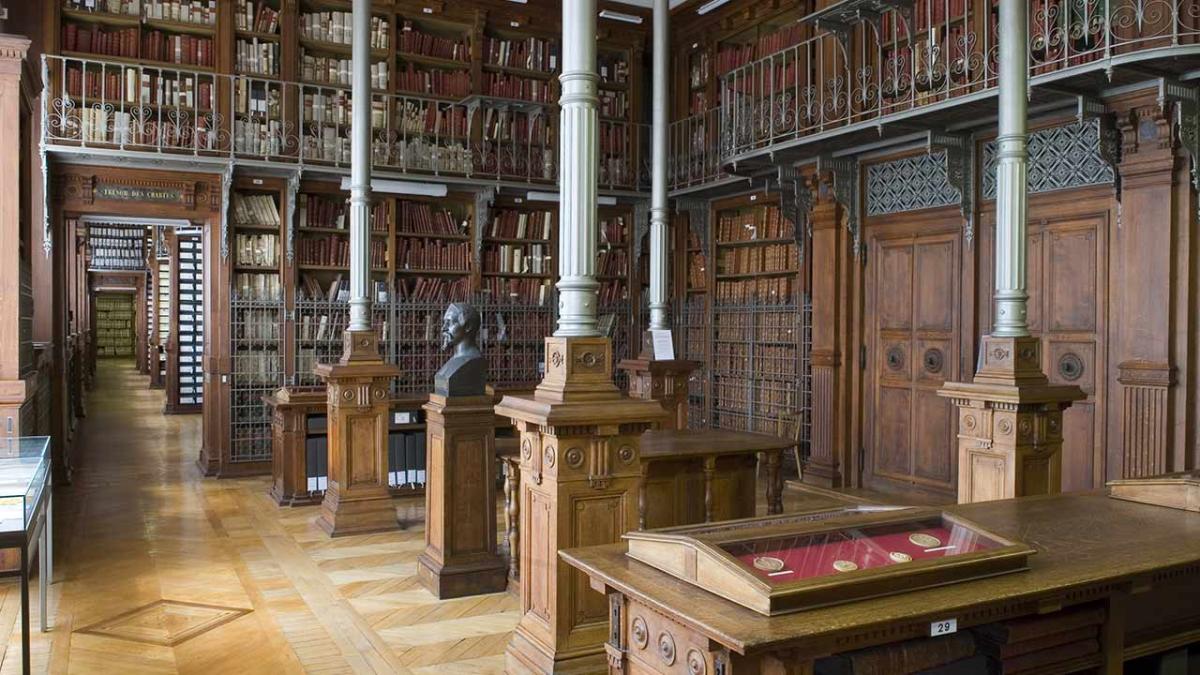
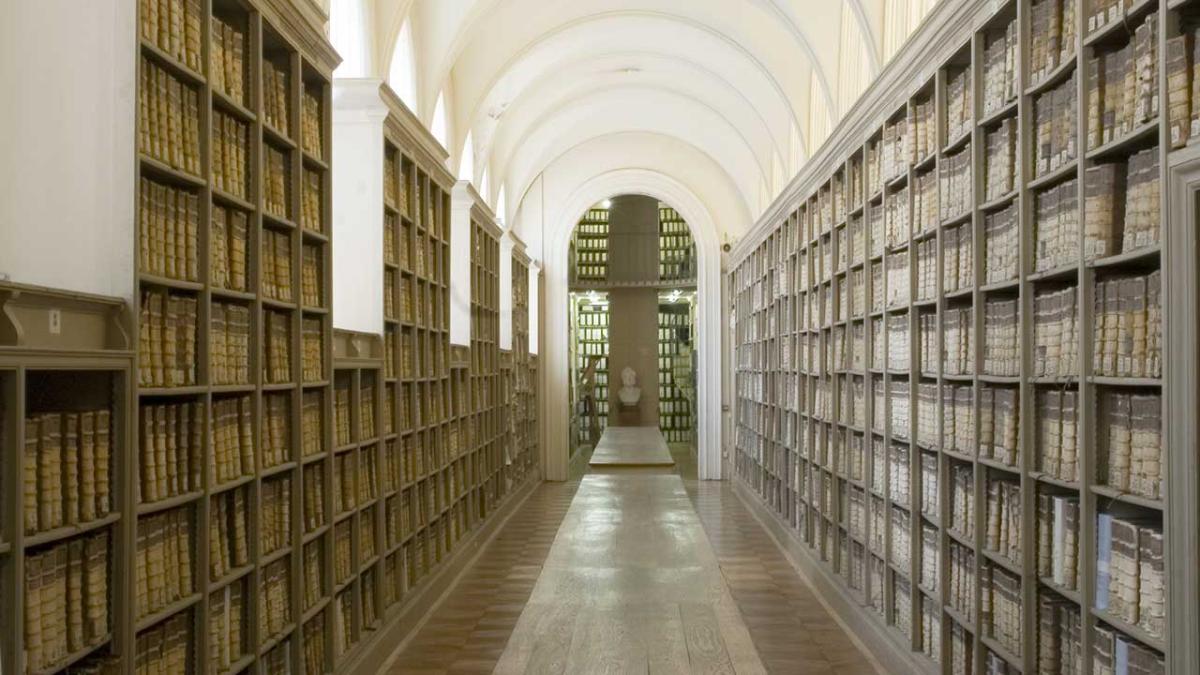
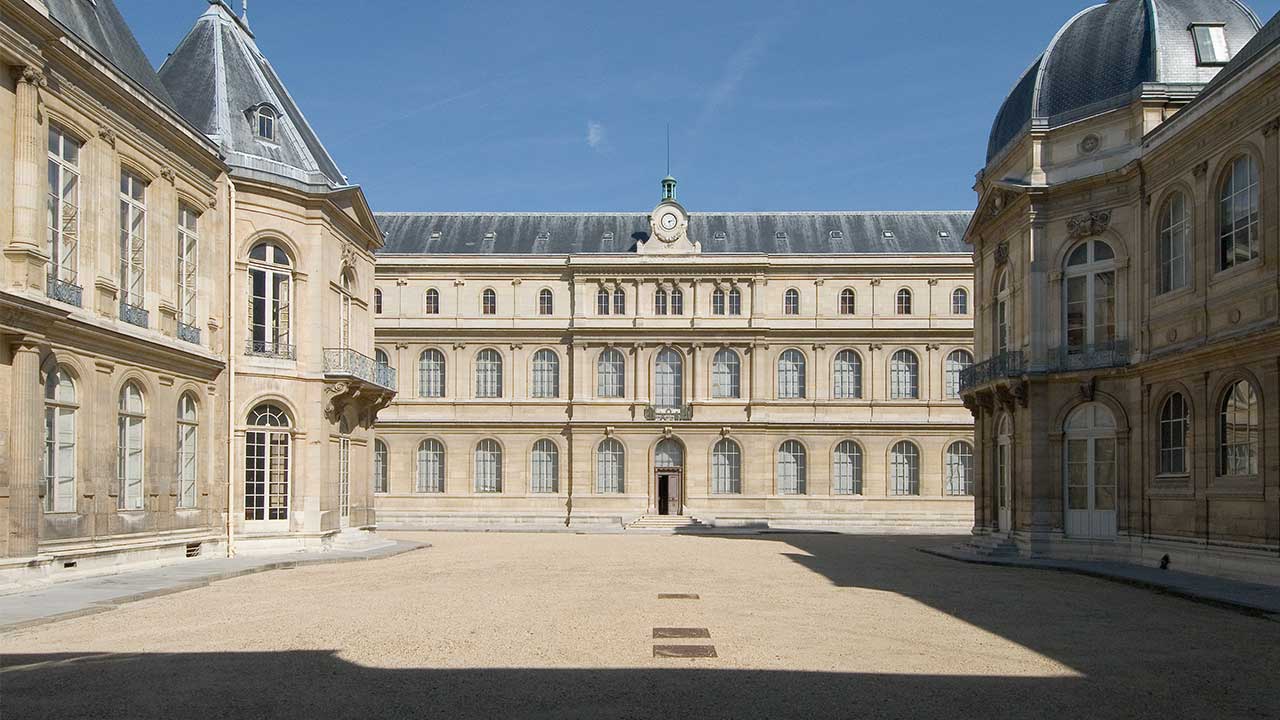
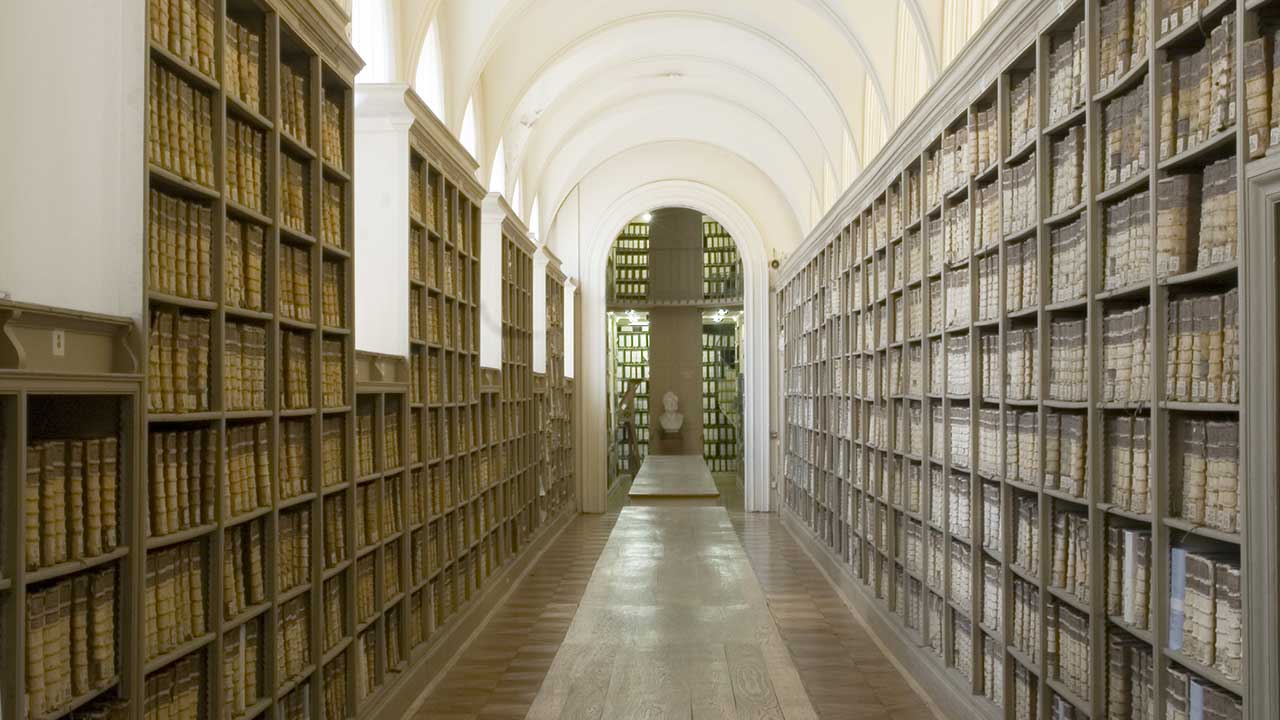
In 1838, the French state began constructing purpose-built, functional yet monumental storage facilities to bring together and preserve archives that had previously been scattered across several locations. This vast building programme, known as the Grands Dépôts, continued until 1880.
Goos to know
The Grands Dépôts open to the general public twice a year, during the European Heritage Days and the European Night of Museums.
In 1808, the Hôtel de Soubise was acquired by the French state and assigned to the National Archives. Napoleon I ordered archives that had previously been scattered across several repositories in Paris to be brought together within the Hôtel de Soubise. However, the premises were unsuitable and quickly became overcrowded. The administration therefore began constructing storage facilities that were both functional and monumental, now known as the “Grands Dépôts”.
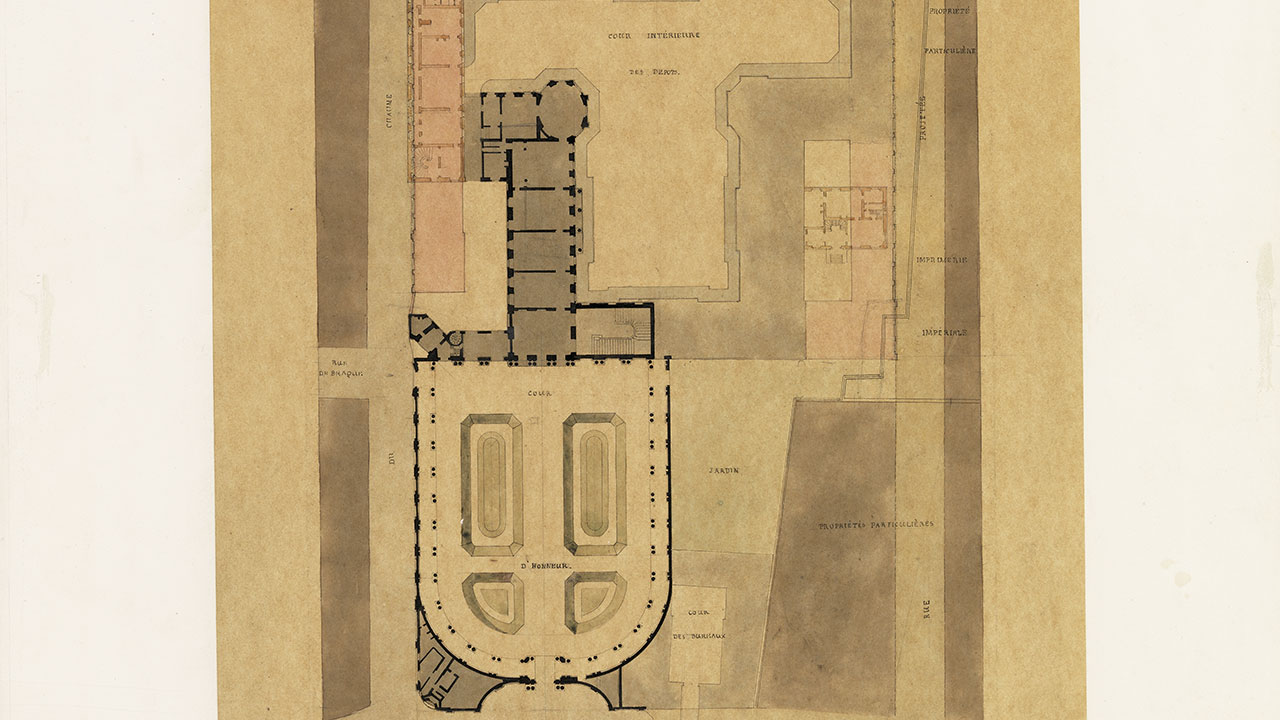
This major building programme spanned the period from the July Monarchy to the Third Republic. It took place in two stages:
* from 1838 to 1848, under the architects Édouard Dubois and Charles Lelong;
* from 1859 to 1880, under Hubert Janniard and then Edmond Guillaume.
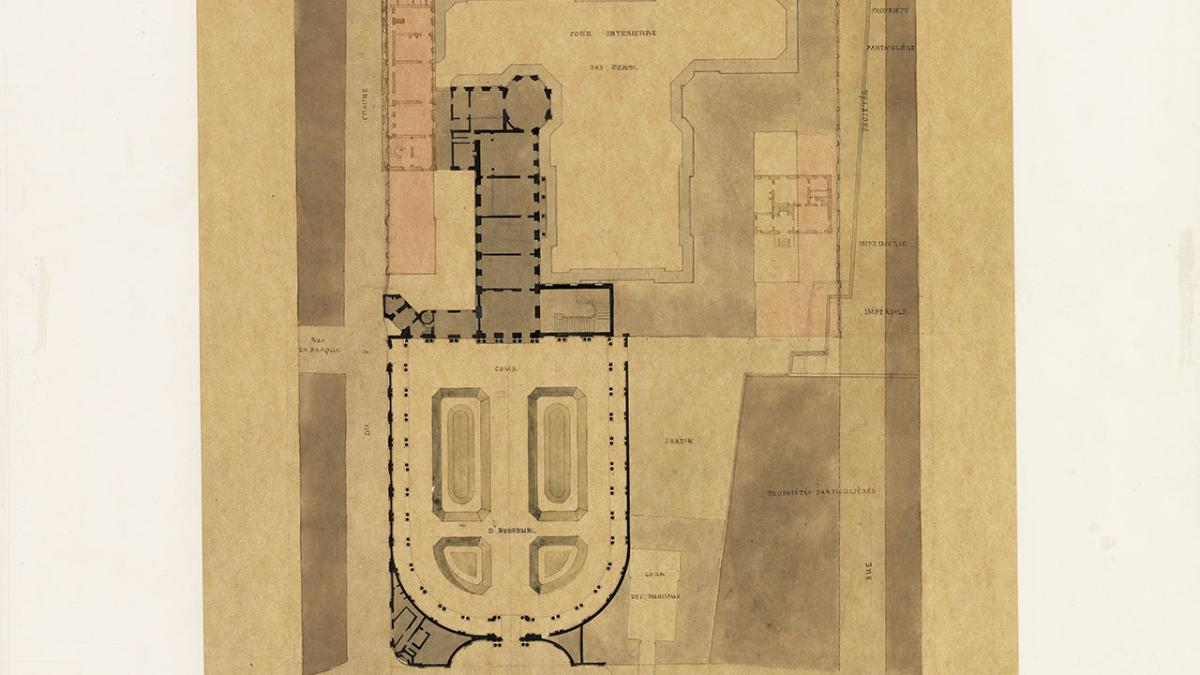
The first buildings, known as the Louis-Philippe repositories, were constructed as an eastern extension of the Hôtel de Soubise, across the gardens.
Monumental storage facilities
The wing built under Napoleon III was completed during the Third Republic. It extended the Louis-Philippe repositories at a right angle, along what are now Rue des Quatre-Fils and Rue des Archives. This development required the demolition of a wing of the Hôtel de Soubise that was considered obsolete.
The courtyard of the Grands Dépôts was thus enclosed around a T-shaped space. The architecture of the Soubise palace stands in dialogue with the monumental storage facilities of the National Archives.
The Grands Dépôts were opened to visitors for a very short period as part of the Museum of the National Archives inaugurated in 1867. These repositories, which housed some of the most precious documents in French history, were soon closed to the public for security and preservation reasons.
Today recognised as a masterpiece of nineteenth-century architecture, alongside such contemporary landmarks as the Sainte-Geneviève Library and the Labrouste Reading Room of the National Library of France, the Grands Dépôts were listed as Historic Monuments in 1993.
The Iron Cabinet, a shrine to French history
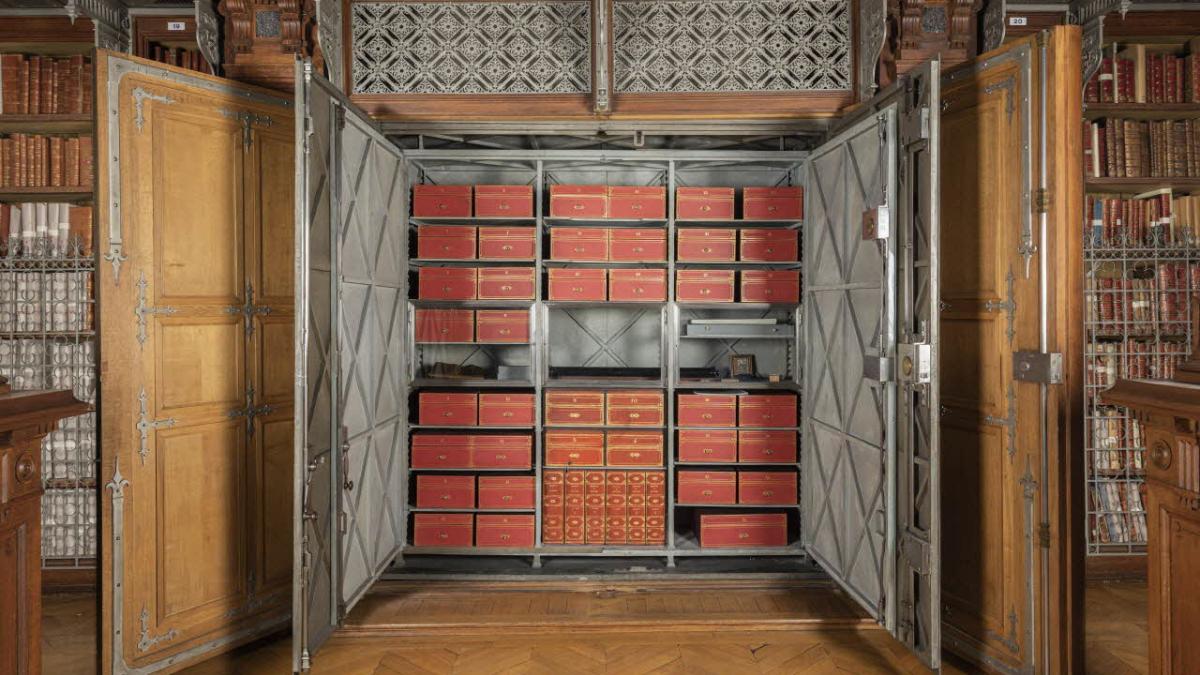
The Iron Cabinet was made by locksmith Henry Koch in 1791 at the request of the National Assembly. It was initially designed to house the printing plates for assignats, and subsequently the essential documents produced by the new regime, including constitutions and the original texts of laws and decrees.
Designed to be indestructible and tamper-proof, it consists of two huge interlocking metal chests. Three keys are required to open it and were entrusted respectively to the President of the Assembly, its secretary and its archivist.
Installed in 1793 near the Assembly chamber in the Tuileries Palace, the Iron Cabinet — not to be confused with the cabinet belonging to Louis XVI — was moved to the first floor of the Hôtel de Soubise in 1848.
Its collection of Revolutionary-era documents was subsequently expanded by Michelet with documents from the Ancien Régime considered to be of particular importance.
In 1866, the Iron Cabinet was placed at the centre of the Grands Dépôts. Its contents have been reorganised several times and continue to grow today. Constitutional texts and laws — including the 2024 law guaranteeing women the freedom to obtain a voluntary termination of pregnancy — now share its shelves with the standard metre and kilogram, the will of Louis XIV, the will of Napoleon I, Louis XVI’s hunting journal, and Marie-Antoinette’s final letter and wardrobe inventory.
It is therefore easy to understand why this shrine to national history, itself a piece of furniture with a remarkable historical destiny, is opened to the public only on rare occasions.

Resources
Further reading
Archives nationales. Le Quadrilatère du Marais, de Régis Lapasin et Sabine Meuleau, coll. Itinéraires du patrimoine, Paris, Éditions du patrimoine, nouvelle édition augmentée 2023.
Available for purchase in the National Archives bookshops
Les Archives nationales. Des lieux pour l’histoire de France. Bicentenaire d’une installation, 1808-2008, de Claire Béchu, Paris, Archives nationales-éditions Somogy, 2008.
Available for purchase in the National Archives bookshops