
The Wills of Poilus
Launched in 2016, the Wills of Poilus project consisted of creating, based on transcriptions by volunteers, a digital edition of soldiers’ wills from the First World War. These wills are preserved at the National Archives and the departmental archives of Yvelines and Val-d’Oise.
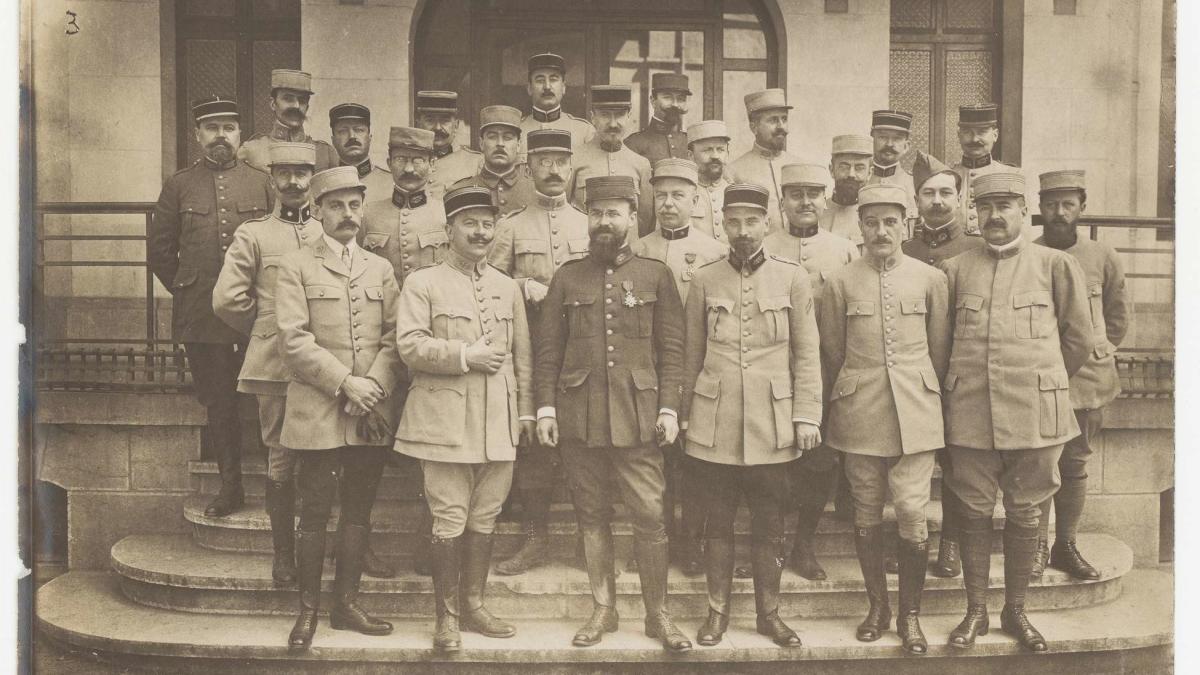
Nearly 1,000 wills written by soldiers who died for France in 1914–18 have been transcribed by volunteers.
In January 2018, the National Archives launched their first call for voluntary contributors as part of the Wills of Poilus project, initiated in 2016. The goal was to transcribe and encode in XML/TEI (see box) — using a collaborative transcription platform designed especially for volunteers and offering an innovative work interface — the text of nearly 1,000 wills written by soldiers who died for France during the First World War or afterwards (from wounds or illnesses contracted during the war).
These wills are now preserved in the notarial archives at the National Archives, as well as in the departmental archives of Yvelines and Val-d’Oise.
They are important for several reasons:
- the Poilu wills are often the only written traces left by the soldiers themselves;
- they provide valuable information about the identity, occupations and life paths of the Poilus, about their connections with loved ones, and about their state of mind.
In 2017, an initial critical edition and study conducted on a subset of this corpus demonstrated both their existence and their scholarly interest.
After six years of work, the project resulted in the design and online publication of a scientific digital edition including images of the wills. This edition was developed in consultation with the most active volunteers within a group of more than 400 contributors. Users can now search and view the images and text of the wills, and export them in PDF and TEI formats.
The the National Archives Lab oversaw this work. In 2025, it will publish in the virtual reading room a detailed inventory of the Poilus wills held at the National Archives, produced from the TEI files.
It is also gradually making available to researchers all the TEI files, which can be freely reused for study. These files have already been used to produce a training corpus enabling an artificial intelligence to automatically read handwritten texts.
Note on XML TEI:
XML/TEI is a computing standard for producing electronic editions of handwritten documents. It makes explicit the structure of the transcribed text (title, date, paragraphs, lists, signatures, postscript…), its layout (line breaks, underlined text…), and its graphic features (grammatical or spelling errors), and identifies the objects it contains (date, person or place names, etc.).
About the project:
This work was carried out with academic partners — the École nationale des Chartes, CY Cergy Paris Université and Université Paris 8 — and funded by the Fondation des Sciences du Patrimoine. An international conference was held in November 2022 to mark the completion of the project